
Wingfoil season in Sri Lanka — when to come and what wind to expect
The wingfoil season in Sri Lanka is longer than almost anywhere else. Two main seasons plus shoulder months that kiteboarders write off but foilers ride. Here's the honest month-by-month breakdown.
The wingfoil advantage: you ride when kites can't fly
Kitesurfing needs 12–14 knots minimum to properly ride. Wingfoiling on a foil works from 8–10 knots. That means in Kalpitiya, April and November — months where kiteboarders largely stay on land — wingfoilers get on the water. The season extends to 10–11 months per year for dedicated foilers. That's rare anywhere in the world.
Wingfoil seasons in Sri Lanka at a glance
| Category | ☀️ Summer (May–Oct) | ❄️ Winter (Dec–Mar) | 🌿 Shoulder (Apr, Nov) |
|---|---|---|---|
| Typical wind | 20–30 knots | 14–18 knots | 8–14 knots (variable) |
| Wingfoil conditions | Excellent — powerful sessions | Excellent — ideal for learning | Good on lighter days |
| Recommended wing size | 3–5m | 5–7m | 6–7m |
| Best for level | Intermediate / Advanced | Beginner / Intermediate | All — lighter wing, more control |
| Kite possible? | Yes | Yes | Often not — foil only |
| Water temp | 28–30°C | 27–29°C | 27–29°C |
| Wetsuit? | No | No | No |
May to October — power and performance
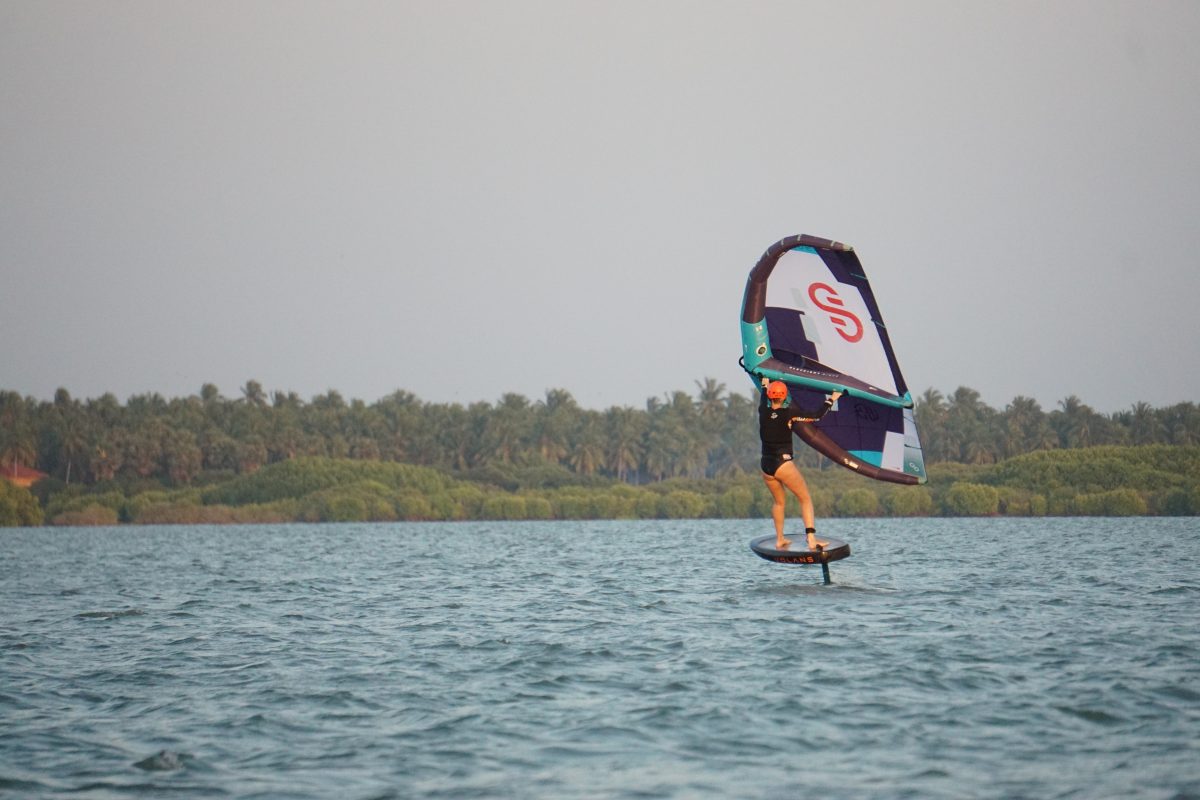
Summer brings the southwest monsoon — strong, consistent wind between 20–30 knots. For wingfoiling this means powerful sessions, higher speeds and the full performance envelope of the sport. July and August are the peak months.
The flat lagoon in front of MKS works perfectly in summer. You can also access Donkey Point for wave wingfoiling, Vella Island for the legendary high-wind sessions and Dream Spot for spacious flat water. Summer is when advanced wingfoilers get the most out of the sport.
- July and August are the most consistent — wind every day, strong and predictable
- May and October are transition months — windier days mixed with lighter ones
- Smaller wings give better control and more speed in strong wind
- Donkey Point wave wingfoil sessions are at their best in summer
- Vella Island is open for advanced wingfoilers — 45 min by boat
Recommended wing sizes — summer
December to March — the best time to learn
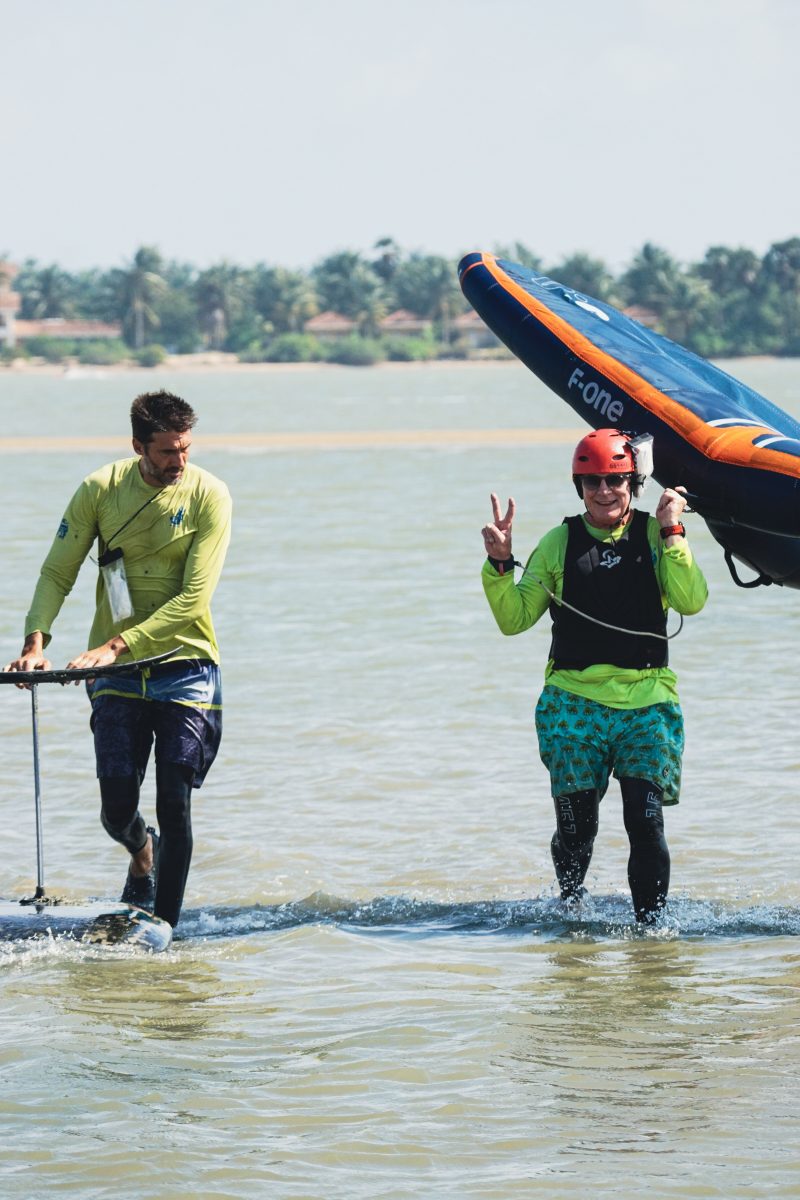
Winter brings northeast thermal winds — lighter at 14–18 knots, building through the day from late morning. For wingfoil beginners this is the ideal season: the wind is manageable, the lagoon is flat and warm, and the conditions are forgiving enough to learn properly without being overpowered.
January and February are the most reliable winter months. The wind arrives consistently and sessions can run all afternoon. December is the start of the season — don't expect fully reliable wind until around December 20–25.
- January and February are the peak — best winter months by far
- Mornings often calm — good for yoga, exploring, then wingfoil in the afternoon
- Larger wings give more power and lift in lighter wind
- Foilers can ride on days with 8–10 knots when kites can't fly
- Book early — January is MKS's busiest month across all sports
Recommended wing sizes — winter
April & November — foilers only
April and November are transition months — wind exists but is unreliable for kitesurfing. This is where wingfoil has a real edge. A foiler with a large wing (6–7m) can get good sessions on days that a kiteboarder would sit out. Not every day, but enough to make the shoulder months viable if you're specifically coming for wingfoil.
If you're combining a Sri Lanka trip with other activities — wildlife safaris, temple visits, diving — the shoulder months can work well. Wingfoil when conditions allow, explore when they don't.
Honest advice: If wingfoil is the only reason you're coming, avoid April and November. But if you're flexible and can combine it with other experiences, these months offer something unique — you may be the only wingfoiler on the lagoon.
Wingfoil conditions in Sri Lanka — month by month
The honest picture for foilers specifically. Notice how many months are marked green — that's the wingfoil advantage over kite.
Questions about wingfoil season in Sri Lanka
When is the best time to wingfoil in Sri Lanka?
Can you wingfoil in Sri Lanka year-round?
What is the minimum wind speed needed for wingfoiling in Sri Lanka?
What wing sizes should I bring to Sri Lanka?
Plan your wingfoil trip to Sri Lanka
Wingfoil Sri Lanka — overview
Everything about wingfoil at MKS — lessons, rental, conditions and community.
Wingfoil overview →Wingfoil spots
Where to wingfoil around Kalpitiya — lagoon, ocean and wave spots by season.
See spots →Wingfoil lessons
Private courses from €60/h. Learn step by step with walkie-talkie coaching.
See lessons →No experience needed. We teach from zero — wing control, board, foil. Step by step at your pace.
Tell us your dates — we'll sort the rest
Both seasons are great for wingfoil. Tell us when you're coming and your level — we'll advise on conditions, gear and what sessions to plan for your trip.